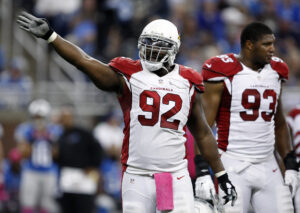
Time is running out, and the student body section is roaring. A quick glance at the stands reveals tons of faces you recognize from school. On the other side of the arena, the same thing, lots of people you know from the community, including your family. The coach is yelling something, but it’s all white noise, and you can’t hear a thing.
It’s the biggest game of the year. What will they say if you screw it up?
What will they say? Honestly, if they are truly your friends and love you, they will put their arm around you and tell you the truth. Everything is going to be ok. The fear of what might happen if you fail is almost always much worse than what does happen when you have the inevitable setbacks that life throws your way. It turns out not to be nearly as horrible as you thought it would be.
But what if you do start hearing from people who were at the game that you failed them? And then the next day, in the newspaper, you read a story where your performance is criticized as the reason for your team’s defeat. How do you manage that?
That is the exact question that Boston Celtics coach Joe Mazzulla was asked by the media during a team practice. His response is something that every coach and athlete should never forget. He said, “I just don’t look at it as pressure because a Boston media member or somebody expecting me to win, they don’t have a weapon. They’re not going to come after me. They’re just saying words.” Mazzulla added, “If we lose, we’re not losing our life.”
It’s not life or death. It’s just a game and, ironically, the more you treat it as just playing and not this super high-pressure situation, the better you will typically play.
Mazzulla pointing out that “they’re just words” gets to the crux of the situation that a lot of people, especially athletes, must come to terms with. Why? Because you should never determine your feelings of success or failure or self-worth to be based on the expectations of others. The greatest motivation should come from within. You play because you love to play and want to get better, not to be the hero or the villain with the final score and what people will say about it afterwards being the motivation.
At the media session, a reporter challenged Mazzulla on his opinion that players and coaches shouldn’t feel pressure from media stories. The reporter said, “But words have power.” To which Mazzulla astutely replied, “No they don’t. If you let them, if you allow words to take your personal power, then yes. So, I don’t allow words to take my personal power.”
Your personal power gets taken away if you let the opinions of others chart your course. Things like the school you choose or the career you pursue should not be decided by how other people will judge those choices. My neighbor got into an Ivy League school. I need to do the same. Or, my buddy just landed a high-salary job at an investment banking firm. I want to make that much money. Living by comparison or the expectations of others is a recipe for unhappiness.
One last thing from Mazzulla’s media interaction on the subject of feeling pressure. He stated, “Nobody’s putting more pressure and expectations (on us) than we are on ourselves.” It might seem counterintuitive, but pressure is not inherently a bad thing. Pressure is a privilege when it comes from the self-motivated drive to compete with yourself every day to get better at playing a game that you love.